###147852369$$$_RedirectToLoginPage_%%%963258741!!!

Previous Talks

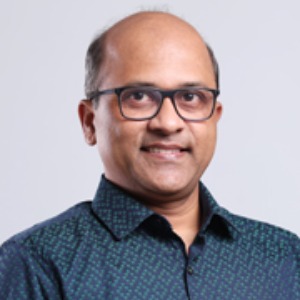
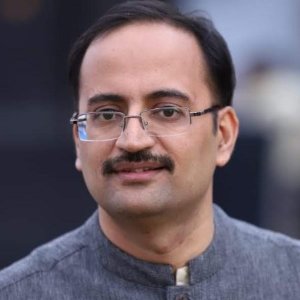
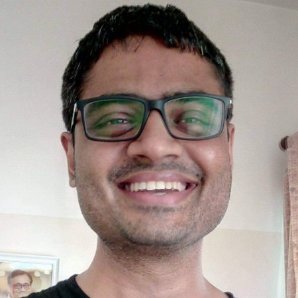
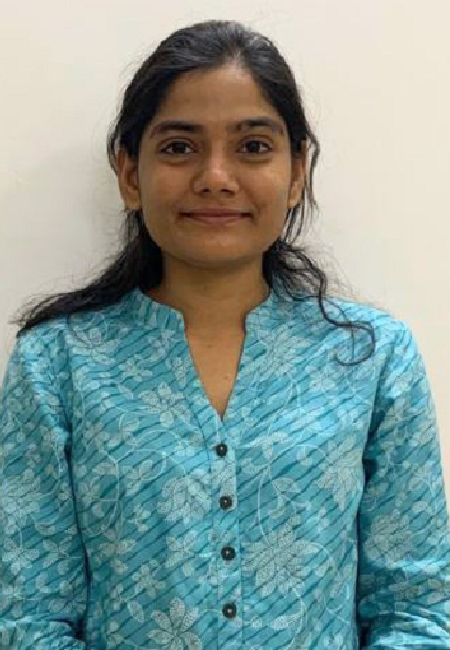
Dr. Sanjeel Parekh

Dr. Sanjeel Parekh

Title of the talk: Audio Research at Meta Reality Labs
Abstract: This talk will be a quick tour through the Audio team’s vision and research. In particular, it will focus on open research initiatives for the community to collectively enable audio-driven AR/VR experiences.
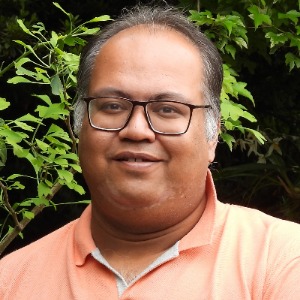
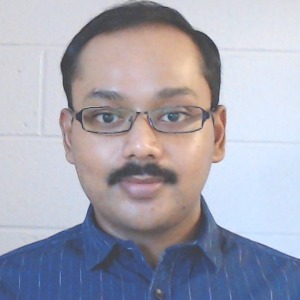
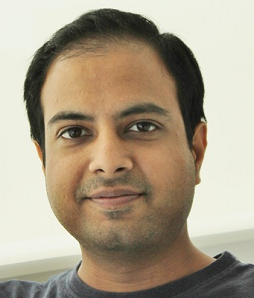
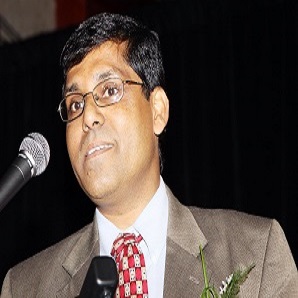
Dr. Jagnyashini Debadarshini

Dr. Jagnyashini Debadarshini

Title of the talk: Adaptive Concurrent-Transmission based Real-Time Data Collection in IoT
Abstract: Internet-of-Things (IoT) is evolving rapidly, enabling smarter and more efficient interconnected systems that have the potential to transform the modern world. A significant portion of an IoT-system is composed of tiny resource-constrained devices. The operation of an IoT-system is heavily reliant on the efficient sharing of data among these devices. Various data-sharing techniques, such as one-to-many, many-to-many, and many-to-one, play a pivotal role in enabling advanced IoT applications across diverse domains. Among these applications, the emergence of Digital Twin (DT) highlights the importance of efficient data-sharing techniques, as they serve as the foundation for bridging the gap between the virtual and real worlds. Data collected from the IoT devices in the real world serves as the key enabler for the creation of DT.

With this ever-growing demand, the design of a data-collection strategy is always concerned with speed and energy efficiency. Recent solutions based on Concurrent-Transmission (CT) have shown quite promising results. CT-based strategies carefully exploit a special physical layer phenomenon called Capture-Effect (CE) for efficient use of spatial-diversity for in-parallel communication at different parts of a network. However, existing works overlook the role of network topology.

This talk focuses on the design and implementation of ACuRe, a fast data-collection strategy that employs simple design principles along with topology-based adaptation for efficient exploitation of CE. The performance of ACuRe is consistent over a wide variety of network configurations and is up to 48.2% faster and 54.3% more energy efficient compared to existing best-known solutions.
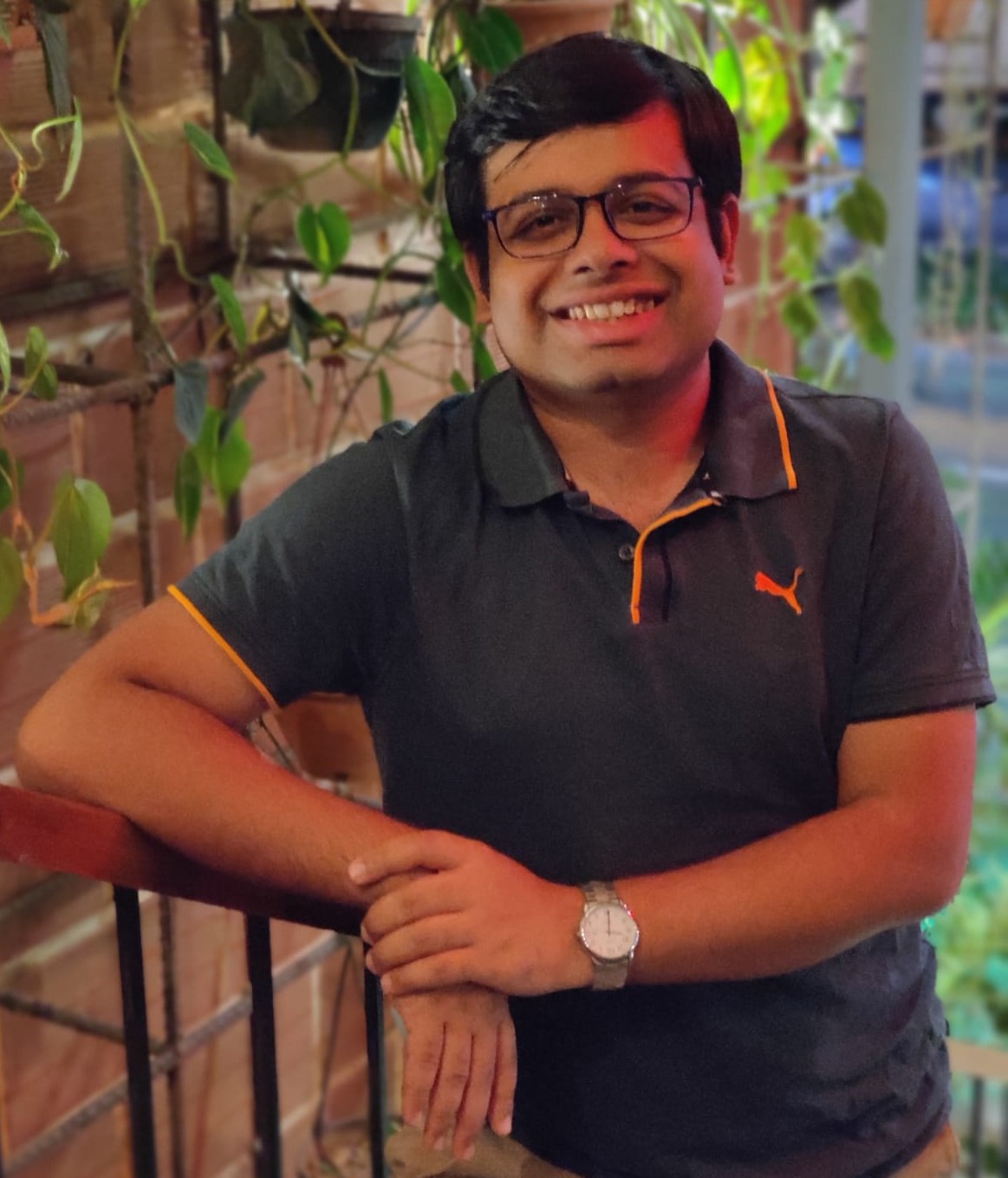
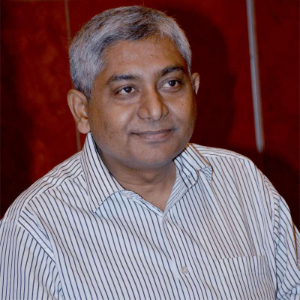
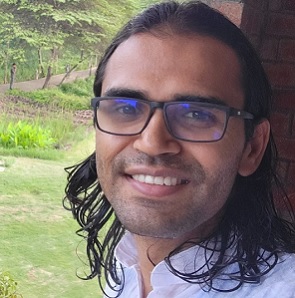
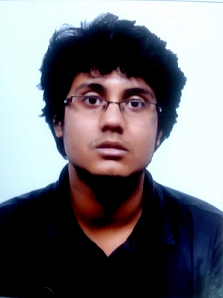
Dr. Mohit Jangid

Dr. Mohit Jangid

Title of the talk: Exploring Potential and Challenges of Symbolic Formal Verification in Security and Privacy
Abstract:Software and protocol development has followed the design-develop-break-patch cycle for many years. One resolution to mitigate such a persistent cycle is to build the systems with formal analysis following the "analysis-prior-to-development" philosophy. At present, state space explosion and the limited expressibility of formal model languages limit the scalability and efficiency of this approach. Expanding the scope of formal methods to broader cases requires augmented modeling and a deeper understanding of the underlying operating mechanisms. In particular, by modeling with a precise system environment and refined adversary capabilities, I wish to expand the boundaries of formal methods, exposing limiting root causes and opening novel paths for improvement. For example, considering how concurrent execution influences the processes; modeling a granular access control for user and adversary groups; incorporating human interactions; allowing adversaries to control program execution at the instruction level; and trading off between literal cryptographic accuracy and modeled theory imprecisions augments the formal modeling to reason about unconventional properties. Apart from raising security assurance, such comprehensive coverage of the system environment and precise adversary capability expand the utility of formal methods to large systems and facilitate the derivation of unconventional properties. Additionally, such design provides further feedback to formal tool development to design targeted building blocks that improve the efficiency, scalability, and expressibility of formal modeling.
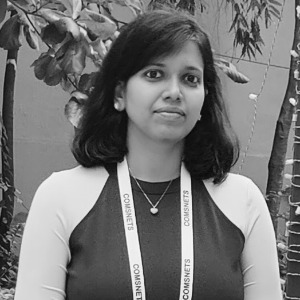
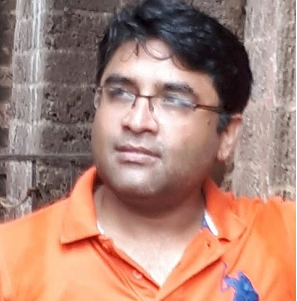
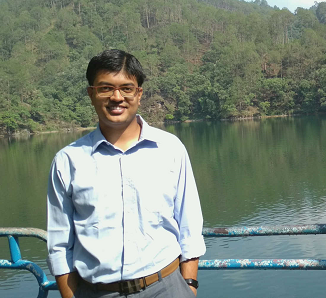
Vaishali Surianarayanan

Vaishali Surianarayanan

Title of the talk: Parameterized Complexity of Kidney Exchange Problem
Abstract: There are more than 90,000 people on the national transplant waiting list in need of a kidney in the United States. These patients often have a friend or family member who is willing to donate, but whose kidney type might not be compatible. To help match these patients to suitable donors, patient-donor compatibility can be modeled as a directed graph. Specifically, in the Kidney Exchange problem, the input is a directed graph G, a subset B of vertices (altruistic donors), and two integers l_p and l_c. An altruistic donor is a donor who is not paired with a patient, and the remaining vertices are patient-donor pairs. Whenever a donor is compatible with a patient from a patient-donor pair, we place a directed edge from the donor vertex to the patient-donor pair. Here the donor vertex can be either altruistic or non-altruistic. The goal is to find a collection of vertex-disjoint cycles and paths covering the maximum number of patients such that each cycle has length at most l_c and each path has length at most l_p and begins at a vertex in B. The path and cycle lengths are bounded so that the surgeries can be performed simultaneously. Kidney Exchange has received a great deal of attention in recent years [IJCAI '18, IJCAI '22, IJCAI '23, AAAI '17, NeurIPS '20, EC '20]. In this talk we discuss our most recent work from IJCAI ‘24 on the parameterized complexity of the Kidney Exchange Problem. First we show that Kidney Exchange is FPT when parameterized by the number of vertex types in G. Two vertices have the same vertex type if they have the same in- and out-neighborhoods. On the other hand we also show that Kidney Exchange is W[1]-hard when parameterized by treewidth. Finally we design a randomized $4^t n^O(1)$-time algorithm parameterized by t, the number of patients helped, significantly improving upon the previous state of the art, which was $161^t n^O(1)$ [IJCAI '22].
Dr. Sukarn Agarwal

Dr. Sukarn Agarwal

Title of the talk: LiNoVo: Longevity Enhancement of Non-Volatile Cache in Chip Multiprocessors
Abstract: The increasing use of chiplets, and the demand for high-performance yet low-power systems, will result in heterogeneous systems that combine both CPUs and accelerators (e.g., general-purpose GPUs). Chiplet based designs also enable the inclusion of emerging memory technologies, since such technologies can reside on a separate chiplet without requiring complex integration in existing high-performance process technologies. One such emerging memory technology is spin-transfer torque (STT) memory, which has the potential to replace SRAM as the last-level cache (LLC). STT-RAM has the advantage of high density, non-volatility, and reduced leakage power, but suffers from a higher write latency and energy, as compared to SRAM. However, by relaxing the retention time, the write latency and energy can be reduced at the cost of the STT-RAM becoming more volatile. The retention time and write latency/energy can be traded against each other by creating an LLC with multiple retention zones. With a multi-retention LLC, the challenge is to direct the memory accesses to the most advantageous zone, to optimize for overall performance and energy efficiency. We propose ARMOUR, a mechanism for efficient management of memory accesses to a multi-retention LLC, where based on the initial requester (CPU or GPU) the cache blocks are allocated in the high (CPU) or low (GPU) retention zone. Furthermore, blocks that are about to expire are either refreshed (CPU) or written back (GPU). In addition, ARMOUR evicts CPU blocks with an estimated short lifetime, which further improves cache performance by reducing cache pollution. Our evaluation shows that ARMOUR improves average performance by 28.9% compared to a baseline STT-RAM based LLC and reduces the energy-delay product (EDP) by 74.5% compared to an iso-area SRAM LLC.
Dr. Nitin Awathare

Dr. Nitin Awathare

Title of the talk: CCPC: Payment Channel Across the Blockchain Networks
Abstract: Blockchain technology has revolutionized the world of finance and decentralized applications, yet challenges in scalability and interoperability persist. As these networks expand, their limited transaction throughput hinders their potential for widespread adoption and mass scalability. Additionally, the lack of seamless interoperability between diverse blockchain platforms further hampers the full potential of blockchain technology. This paper introduces the Cross-Chain Payment Channel (CCPC) protocol, a novel solution that not only enables interoperability between different blockchain networks but has the potential to enhance scalability. The CCPC protocol enables secure and efficient off-chain fund transfers between two accounts residing in different blockchains, effectively breaking down the barriers of isolated and fragmented ecosystems. Through the establishment of direct payment channels between different blockchain networks, the CCPC protocol allows parties to engage in multiple cross-chain swaps without involving the main blockchain each time. This protocol can further be utilized in a blockchain sharding system to potentially reduce the fraction of cross-shard transactions recorded at the layer-1 blockchain. By doing so, the protocol can potentially improve latency and transactional throughput, presenting an ideal solution for overcoming scalability barriers while maintaining security. We have successfully implemented the CCPC protocol for Ethereum-based blockchains, establishing a cross-chain payment channel between two disparate blockchains. Through extensive experiments, we obtained essential metrics, such as gas usage and time, at various stages of cross-chain payment channel interactions.
Akshima

Akshima

Title of the talk: Time-Space Tradeoffs for Collisions in Hash Functions
Abstract: Cryptographic hash functions are functions that take arbitrary length inputs and output fixed length digest. They are one of the most important cryptographic primitives and widely used in applications today. Apart from the compression requirement, the applications using these functions could need additional properties to be provably secure. One such, perhaps the most important property is collision resistance. This property has been well studied for uniform adversaries. However, uniform adversaries fail to capture many real-world adversaries. Hence, several recent works have studied the collision resistance property for non-uniform adversaries. Analyzing non-uniform adversaries presents several challenges. That is why Dodis et al in their EUROCRYPT 18 paper presented a reduction to another (easier to analyze) model named Bit-fixing model. In our CRYPTO 20 paper, we showed that adversaries in this Bit-fixing model are too strong when the length of the collisions are bounded. We also showed a reduction to the Multi-instance model, which helped us obtain better results for restricted parameter ranges. In our recent CRYPTO 22 paper, we further explored the relation between the Bit-fixing model and the Multi-instance model and further improved the results with our new findings. The talk will include some preliminary definitions, detailed description of these models, results and a high level idea of the techniques from all the relevant works.
Prof. Sudeep Sarkar

Prof. Sudeep Sarkar

Title of the talk: A Perceptual Prediction Framework for Self-Supervised Event Detection and Segmentation in Streaming Videos
Abstract: Events are central to the content of human experience. From the constant stream of the sensory onslaught, the brain segments, extracts, represents aspects related to activities, and stores in memory for future comparison, retrieval, and re-storage. This talk will focus on the first problem of event segmentation from video streams. Can we temporally segment activity into its constituent sub-events? Can we spatially localize the event in the image frame? These tasks have been tackled through supervised learning, often requiring large amounts of training data associated with many manual annotations. The question we ask is: can we do these tasks without the need for manual labels? Human perception experiments suggest that we can solve these tasks without requiring high-level supervision. I will share our experience with a set of minimal, self-supervised, predictive learning models that draws inspiration from cognitive psychology and recent brain models from neuroscience. This approach can be used for temporal segmentation and spatial localization of events in the image. We will see results on traditional activity datasets such as Breakfast Actions, 50 Salads, and INRIA Instructional Videos datasets and on ten days of continuous video footage of a bird's nest. The proposed approach can outperform weakly supervised and other unsupervised learning approaches by up to 24% and have competitive performance compared to fully supervised methods.

Prof. Salil Kanhere

Prof. Salil Kanhere

Title of the talk: Transparent, Trustworthy and Privacy-Preserving Supply Chains
Abstract: Over the years, supply chains have evolved from a few regional traders to globally complex chains of trade. Consequently, supply chain management systems have become heavily dependent on digitisation for the purpose of data storage and traceability of goods. However, current approaches suffer from issues such as scattering of information across multiple silos, susceptibility of erroneous or untrustworthy data, inability to accurately capture physical events associated with the movement of goods and protection of trade secrets. Our work aims to address above mentioned challenges related to traceability, scalability, trustworthiness and privacy. To support traceability and provenance, a consortium blockchain based framework, ProductChain, is proposed which provides an immutable audit trail of product's supply chain events and its origin. The framework also presents a sharded network model to meet the scalability needs of complex supply chains. Next, we address the issue of trust associated with the qualities of the commodities and the entities logging data on the blockchain through an extensible framework, TrustChain. TrustChain tracks interactions among supply chain entities and dynamically assigns trust and reputation scores to commodities and traders using smart contracts. For protecting trade secrets, we propose a privacy-preservation framework PrivChain, which allows traders to keep trade related information private and rather return computations or proofs on data to support provenance and traceability claims. The traders are in turn incentivised for providing such proofs. A different privacy-preservation approach for decoupling the identities of traders is explored in TradeChain by managing two ledgers: one for managing decentralised identities and another for recording supply chain events. The information from two ledgers is then collated using access tokens provided by the data owners, i.e. traders themselves.
###147852369$$$_RedirectToLoginPage_%%%963258741!!!
arrow_downward