
Pritam Mahawar
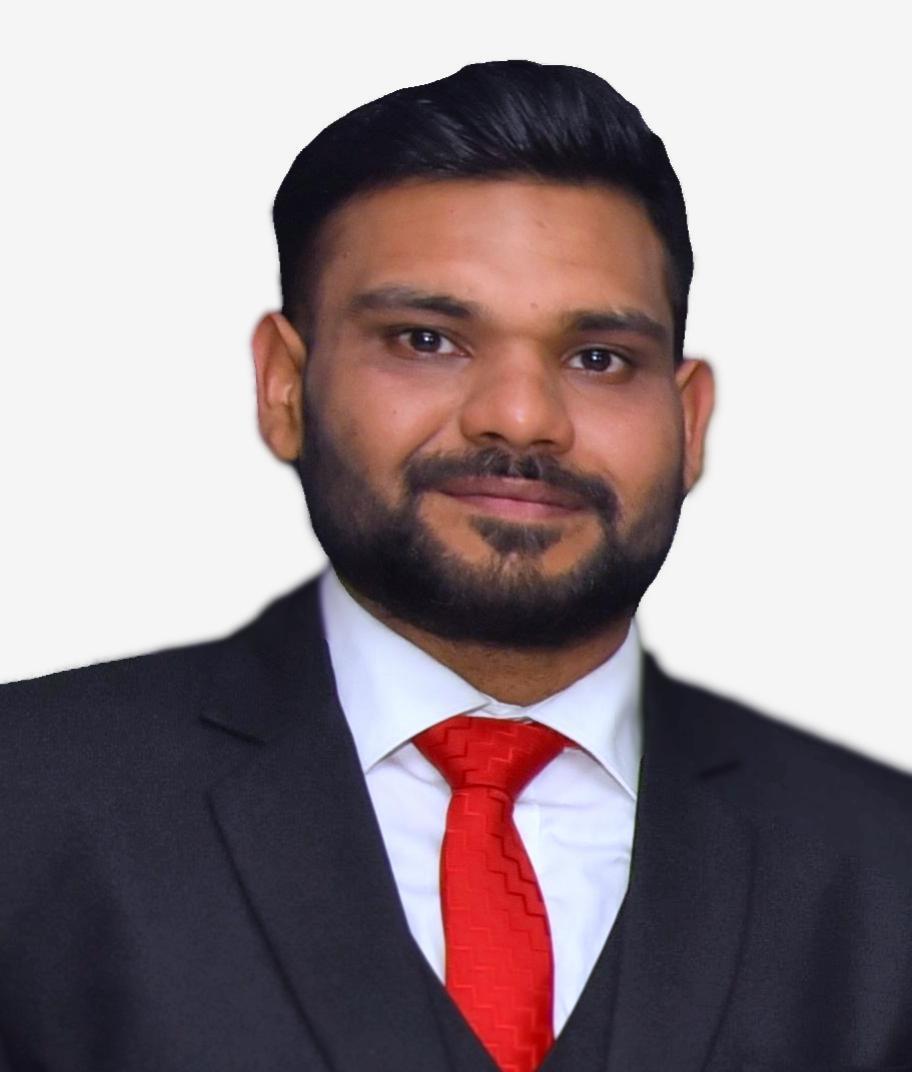
Pritam Mahawar
Assistant ProfessorAbout
Dr. Pritam Mahawar was born and raised in Jagdalpur, Chhattisgarh, where he completed his early education. He obtained his undergraduate degree from Bastar University, Jagdalpur, and his postgraduate degree from Jiwaji University, Gwalior. He obtained his Ph.D. in 2021 in main-group organometallic chemistry from the Indian Institute of Technology Delhi, under the supervision of Prof. Selvarajan Nagendran. His doctoral research centred on the synthesis and reactivity of air- and water-stable low valent germanium compounds, including their potential applications in catalysis and biological systems. Following his Ph.D. in April 2022, he joined Prof. Jun Okuda’s group at RWTH Aachen University, Germany, as a postdoctoral researcher. There, he worked on the isolation of amphoteric zinc hydride and low-valent dimetallocenes and explored their applications for CO 2 and dihydrogen activation. In 2024, he joined Prof. Justin R. Walensky’s group at the University of Missouri, USA, where his research expanded to actinide chemistry, particularly the development of main group–actinide heterobimetallic complexes for small-molecule activation. Dr. Mahawar joined the Department of Chemistry, Indian Institute of Technology Jodhpur, in March 2026 as an Assistant Professor. His research interests broadly encompass the synthesis, reactivity, and mechanistic understanding of metallocenes, dimetallocenes, and homo- and heterobimetallic hydrides of low-valent main-group and transition metals, to develop innovative catalytic systems and explore new frontiers in chemical reactivity.
Research
Dr. Mahawar’s research group is centred on the design, synthesis, and reactivity of low- valent main-group organometallic systems, with a particular focus on homo and heterobimetallic complexes, particularly emphasising the metallocene and dimetallocene systems. These compounds represent a rare and emerging class of sandwich and half sandwich complexes featuring metal–metal bonds, offering unique opportunities to explore unconventional bonding and electronic structures in main-group chemistry. Beyond fundamental investigations, Dr. Mahawar’s research is driven by applications in small-molecule activation and catalysis. The polarized metal–metal bonds in these bimetallic complexes enable the activation of challenging substrates such as dihydrogen, carbon dioxide, and carbon monoxide. Overall, his research aims to bridge fundamental main-group chemistry with practical catalytic applications, contributing to the development of sustainable chemical processes. This research program offers an intellectually stimulating environment for students to engage in state-of-the-art organometallic synthesis and catalysis, gain deep mechanistic understanding, and make creative, impactful contributions toward advancing the frontiers of main-group organometallic synthesis and catalysis.
The key research domains in his group include:
- Low valent homo/heterobimetallic chemistry
- Low valent homo/heterobimetallic hydrides
- Metallocene and dimetallocenes systems
- Small molecule activation
- Catalysis